At work the other day we got talking about
Critical Mass, a cycling event viewed as a
social movement, where hundreds of cyclists take to the streets of Chicago and travel
en masse through the city. Occuring every last Friday of the month and now spread to more than 300 cities around the world, this
social movement was originally formed by activists to communicate the issues they faced such as intimidation by motor vehicles and has evolved into an event in which cyclists see as celebratory of their rights of operating their vehicle i.e. bicycle, on shared roads with motor vehicles. My coworkers and I were describing this event to someone who was unfamiliar with it when I said,
"Critical Mass was originally created in San Francisco", and then one of them added,
"But of course, that is San Francisco".
San Francisco is everything
liberal and when people talk about this city, a lot of times it is about this city's
expression and
progressive values that have made
actual impact most notably for its
gay pride, anti-war campaigns,
1960s hippie movement, and other issues generally not popular among conservatives. The city is also celebrated for its
diversity. These together make
San Francisco a great city. Beyond romantic homes perched on the legendary
steep hills, the majestic
Golden Gate bridge, and famous summer
fog, there is something deeper about
San Francisco and there is a place for everyone (unless if you're a conservative, that is!).
The first time T and I were in
San Francisco together was back in college when we did summer school at the University of California-Berkeley. The campus, also hugely known for its rigor and student activists, is located in the bay area and we conveniently spent a lot of time between Berkeley and San Francisco then. We knew there was something about
San Francisco that made us want to return and after some years we finally returned to visit
(conveniently timed to coincide with a conference T attended). This time we experienced
San Francisco no longer as college students but as (married!) working adults. The verdict remains unchanged back from our college days:
San Francisco is our favorite city in the U.S.
The many
ethnic enclaves in
San Francisco are one of the most
dynamic and
vibrant we have seen compared to other cities we have traveled to. We could not help but draw comparisons to what we have back in Chicago. Chicago really is a great city with a fantastic dining scene, along with so many unique neighborhoods each with its own defining characteristics. Being back in
San Francisco, however, made us realize only again that the dynamic levels of its neighborhoods were basically two or threefold of Chicago's.
Chinatown
As the
oldest in the U.S. and the
largest outside Asia,
Chinatown in SF is an important institution in itself to the
history and
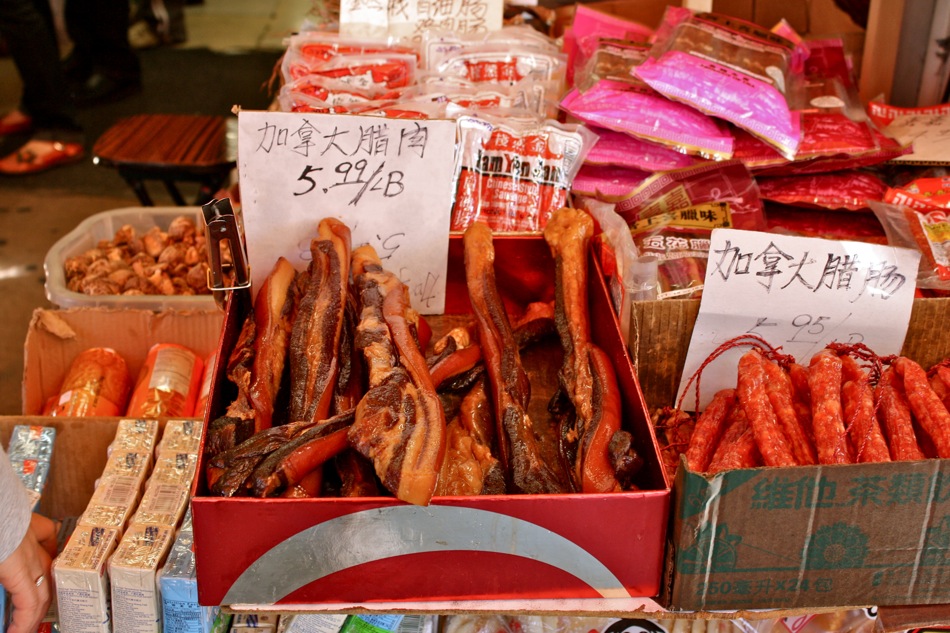
culture of the city. With a vibrant life of its own, walking the streets and alleys made us feel like we were transported out of the U.S. Vastly different from Chicago's Chinatown where the commercial area is on two streets, Chinatown in SF spans many radius blocks with an active living and breathing community who reside there. Like a city within a city, this Chinatown has its own postal office, schools, hospitals, etc.

 Stockton Street
 has the greatest concentration of fresh produce, fruit, and live seafood stores lined right next to each other, it's a wonder they never have to worry about competition. The produce and seafood for sale are piled onto the sidewalks as the stores are not big enough to accommodate the huge selections. Shoppers were out and about running their errands and walking through
Stockton Street proved to be quite an experience especially on weekend mornings when it tends to be the busiest, reminiscent to Hong Kong.


The
alleys are also worth exploring as they offer a more authentic and less touristy feel. I really enjoyed walking through
Ross Alley, the oldest alley in the city. With multiple Chinese signage above our heads, it has the old world feel and also reminiscent of side streets in Hong Kong.
Stockton Street offers a truer taste of Chinatown while
Grant Avenue is geared more to tourists as evidenced by the number of souvenir stores and we personally preferred walking on
Stockton Street and the other main streets like
Broadway Street. Many
authentic and
hole-in-the-wall restaurants and
Chinese bakeries offer excellent roast meats, congee, dim sum, and pastries. Medicinal herb stores are not lacking as well.
North Beach
Directly next to Chinatown
is
North Beach, known as
Little Italy, and is very much less hectic than Chinatown. Although
North Beach was where the Italian American population called home in the early days, today the neighborhood is made up of many residents not of Italian heritage. The streets in
North Beach maintains its Italian identity with street poles painted with the
Italian flag colors. The streets have a great mixture of business establishments including Italian restaurants, cafes, coffee shops, bakeries, and bookstores that make this neighborhood worth visiting.

The eastern side of
Broadway Street in
North Beach is also the unofficial red light district of the city with a concentration of strip clubs. Since North Beach and Chinatown are literally next to each other, the western side of
Broadway Street spills into Chinatown and it was definitely an amusing experience walking along authentic Chinese restaurants before suddenly having multiple strip clubs appear before our eyes. For those who are interested, it definitely makes a visit to the strip club after a Chinese dinner very convenient.
 |
| Sentinel Building |
 |
| Financial District's TransAmerica Pyramid, as seen from North Beach |
Back in Chicago the Little Italy area centered along Taylor Street is almost fading. Originally home to Italian immigrants in the 19th century, many of them have gradually moved and are spread out in different parts of the city. Taylor Street has gone through gentrification and three Italian restaurants and an Italian grocery store are what leaves any Italian trace to the area at all which today is filled with other American bars and Thai restaurants that have popped up. The consolation is that our personal favorite Italian restaurant,
Francesca's, is on Taylor Street.
Mission District
The moment we stepped out of the BART train station, we knew that
The Mission was special. The streets were bustling with people on a Saturday afternoon at this area with a
Latino influence with a
bohemian and
artsy mix. Today an increasing number of hipsters and young urban professionals make their home in
The Mission.
Taquerias are plentiful and one is spoilt for choice when it comes to tacos and
horchata, although every local has his or her own favorite place to hit up.

 The Mission
 is not all about Mexican food, however. The district is famous for its
murals in which many people travel to just to see and photograph. The
murals were impressive and clearly done with a lot of intricate, artistic, and creative thoughts put into them. They were anything but amateur work done with spray paint.
There is endless character at
The Mission which makes it such a unique place where one can easily spend an afternoon at. On
Valencia Street there is a concentration of eclectic boutiques, cafes, bars, bakeries, coffee and ice-cream shops. Some of the business establishments are also along 14th and 24th Streets.
The Mission is home to several very popular and well known establishments such as
Tartine Bakery (
winner of James Beard Award for Best Pastry Chef) where we had the best bread pudding. Our dinner at
Saison (2 Michelin stars) also proved to be the most unforgettable ever.
Little Saigon
Little Saigon is really only all about the
Vietnamese food. This tiny two-block community is located within the Tenderloin area which is reputed to be seedy especially at night but locals will say there is no reason to avoid the area during the day especially when it is filled with cheap and wonderful ethnic eats. We couldn't agree more. Being in any big city requires common sense and being street mart. We are so used to putting our
city radar on especially when living in a big city like Chicago and honestly we found the southside of Chicago to be way more sketch than the Tenderloin in SF. Avoiding
Little Saigon would mean missing out excellent
pho and other
Vietnamese rice and noodle dishes.
For
pho enthusiasts, the restaurants offer
Northern or
Southern style pho depending on the region that the restaurant specializes in. A very popular choice among locals is
Turtle Tower which offers excellent
Northern style pho served with light and clear both. For
Southern style pho which has more intense spices, we really liked
Them Ky where T claimed to also have had the tastiest grilled beef rice.
Japantown
The pedestrianized street named
Osaka Way was interesting enough to make us want to visit
Japantown. With only three Japantowns remaining today in the U.S., the one in San Francisco is known as the
largest and
oldest enclave outside Japan. The appearance of
Japantown provides a smidgen of what one would expect to see and experience in a city in Japan. This calm and serene neighborhood is not as crowded as Chinatown and it is the perfect place to window shop or buy little Japanese trinkets, snacks, or housewares. It is home to a variety of Japanese stores (Daiso), bookstore (Kinokuniya), grocery stores, hotel, martial arts studios, restaurants, etc. Interestingly we also spotted a couple of Korean restaurants and bars in the area.

As always our travel plans are driven by food and we were in
Japantown for an excellent
omakase dinner at
Kappa. The meal was intimate, cooked and served by a husband-and-wife team whose restaurant seats no more than 10 people.
With all these well rooted and historically rich ethnic enclaves, they help define part of what San Francisco had been and continues to be today. It has a place for everyone.